
Ten starter battery myths – and their truth.
According to the German Mobile Club ADAC ( [Opens in a new tab] ADAC Roadside Assistance Balance 2025), as in previous years, a failure or discharge of the starter battery is the most common cause of breakdowns. Numerous myths continue to surround the causes. We explain the principle of operation of modern batteries and dispel the most persistent myths.
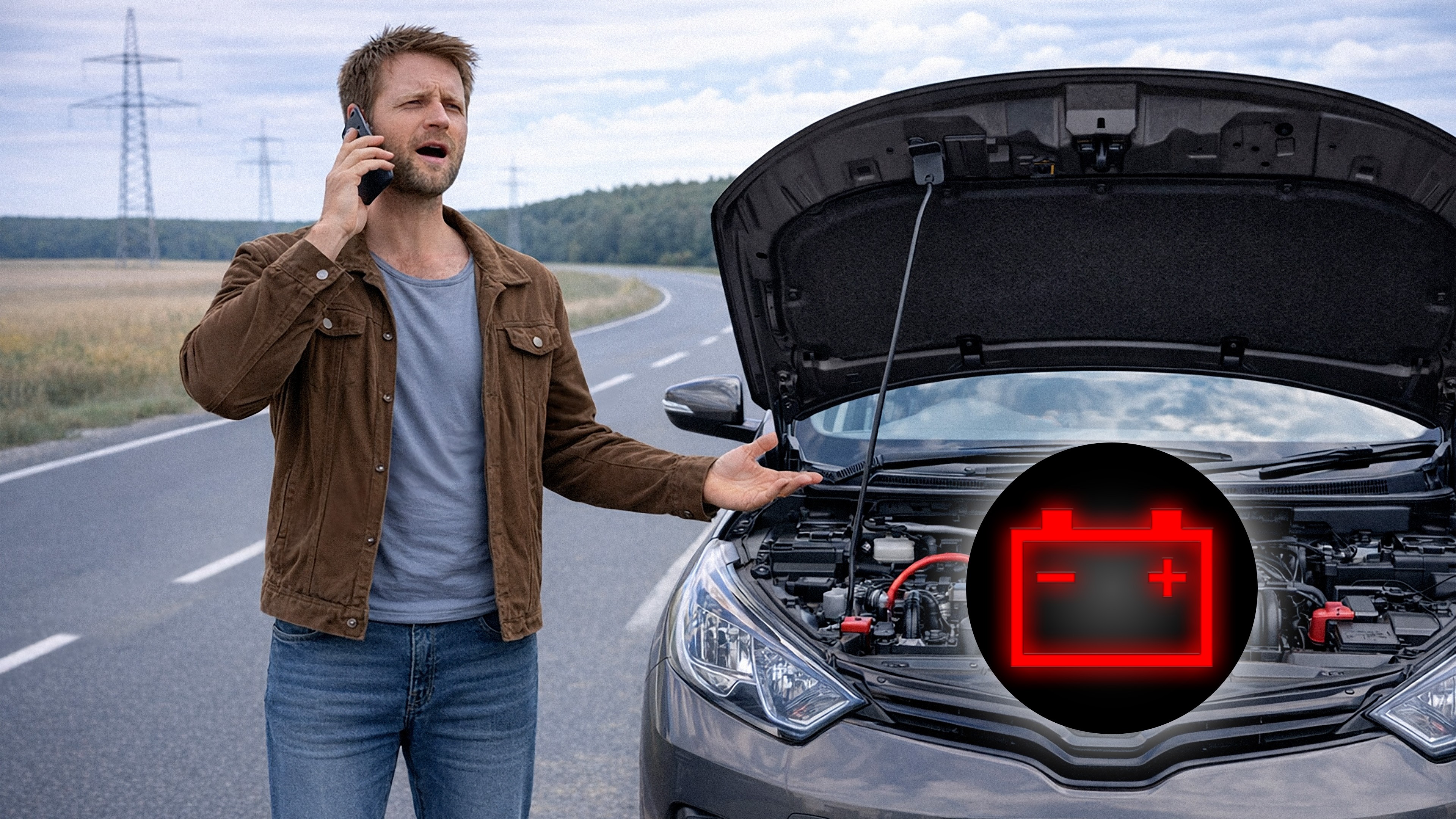
Tasks of the 12V starter battery in modern vehicles.
In gasoline engines, the battery continues to power the spark plugs after start-up, while diesel engines do not require spark plugs once the engine is running. However, the glow plug is also supplied with energy by the vehicle battery at start-up.
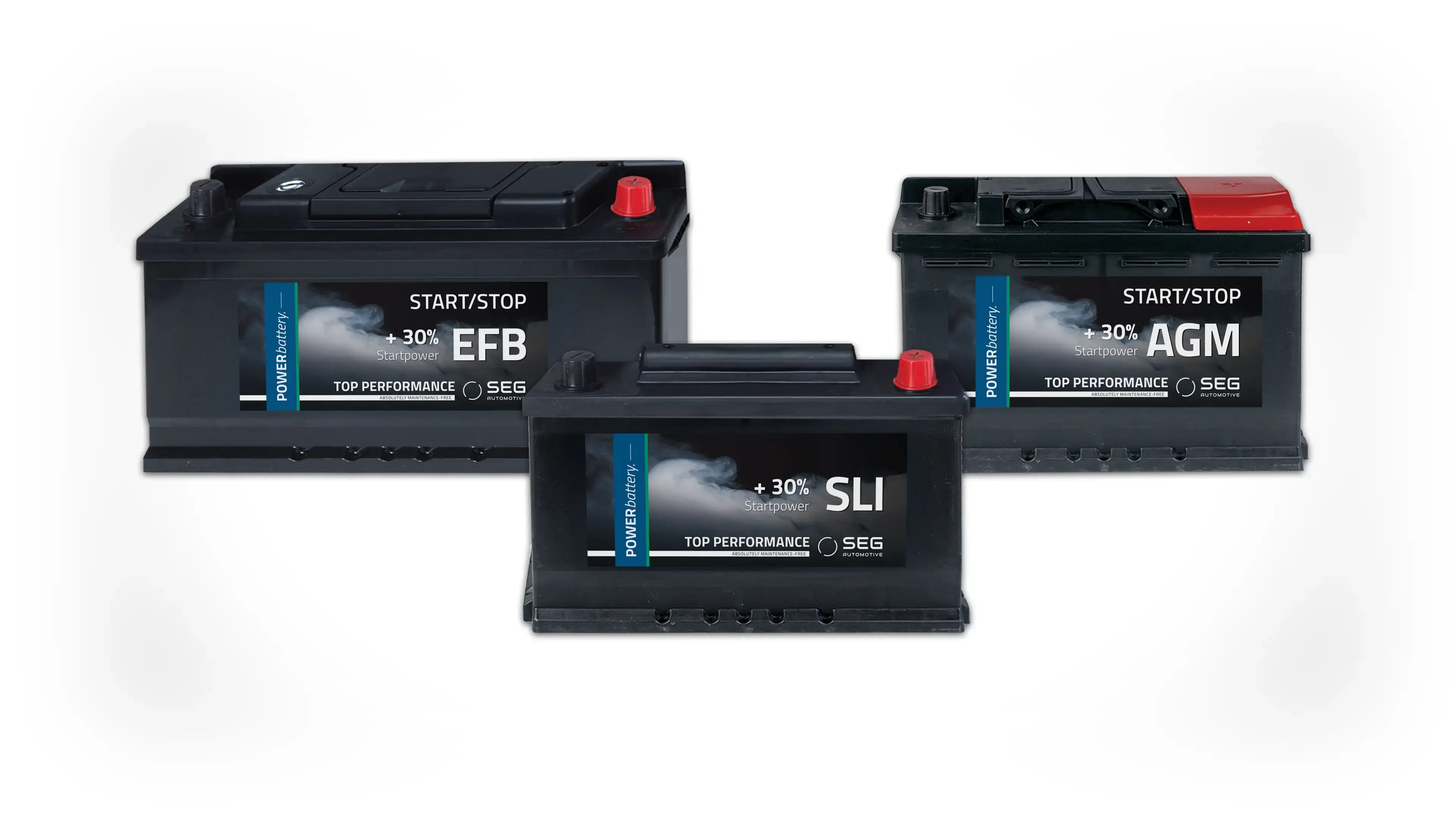
The battery is particularly stressed in vehicles with start-stop systems, as the engine is frequently restarted. As a rule, powerful batteries, such as the EFB and AGM batteries from SEG Automotive, are used for this purpose.
In addition, however, there are now up to 100 electrical consumers that have to be supplied with energy while driving. These include vehicle lighting, a variety of control units, sensors, driver assistance systems, onboard infotainment systems and external multimedia devices such as tablets and smartphones. AI-supported voice assistants with permanent online access are also being used more and more frequently.
Starter battery technology.
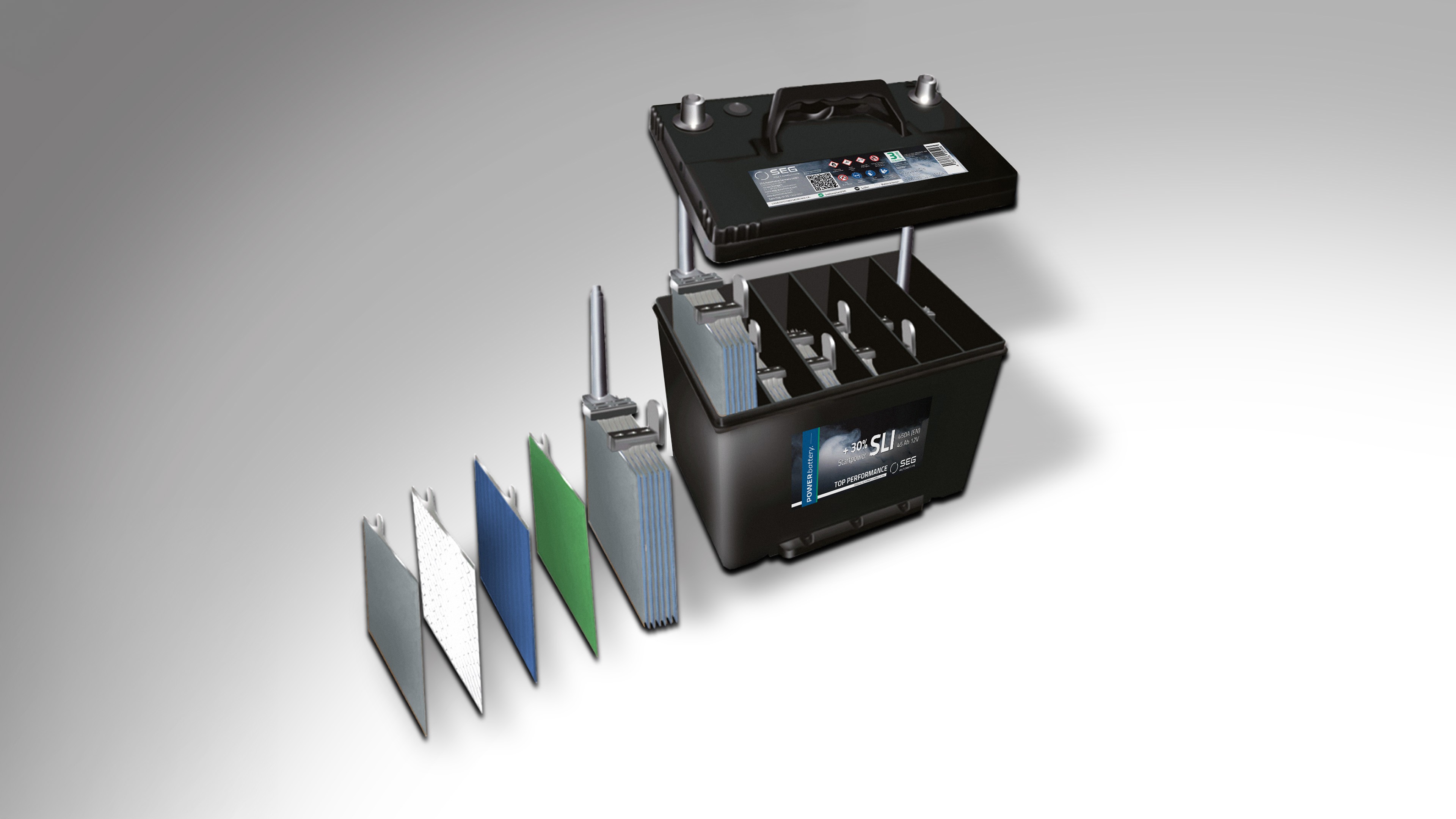
A car battery, usually in the form of a lead-acid battery, consists of cells connected in series that together deliver a voltage of 12.78 volts. There are two electrodes in each cell: a positive one made of lead dioxide and a negative one made of lead. These are submerged in a dilute sulfuric acid electrolyte, which serves as a conductive medium. There are separators between the electrodes that prevent direct contact but allow ion exchange. The entire assembly is enclosed in a robust, acid-resistant plastic housing that protects the battery from external influences and mechanical damage. The battery is connected to the vehicle's electrical system via two connection terminals – positive and negative terminals. When discharging, the battery converts chemical energy into electrical energy, while when charging, this process takes place in reverse.
Myths about the starter battery – and what is really true.
Myth 1: "Modern cars no longer have battery problems"
Fact: Despite modern technology, the starter battery is still the No. 1 cause of breakdowns.
- many electrical consumers
- Start-stop systems
- Short-haul operation
- Long service life
As a result, batteries are even more stressed today than in the past.
Myth 2: "A car battery always has exactly 12 volts."
Fact: "12 volts" is only a nominal value. A fully charged starter battery is typically around 12.6–12.8 V, and at 12.5 V it is already considered significantly discharged. Even small voltage differences have a major impact on starting capability and on-board electronics.
Myth 3: "Maintenance-free means you never have to worry about it."
Fact: "Maintenance-free" only means that no water needs to be refilled. Regular checks (voltage, state of charge) remain important – especially for short-distance vehicles or seasonal cars. Otherwise, there is a risk of creeping deep discharge.
Myth 4: "Short trips already recharge the battery."
Fact: Especially with modern vehicles, a short trip is often not enough to:
- Balance the startup process
- Compensate consumers (heating, seat heating, assistance systems)
The battery is more likely to be discharged than charged.
Myth 5: "When changing batteries, only dimensions and ampere-hours (Ah) count."
Fact: In modern vehicles, the following are also crucial:
- Battery type (z. B. EFB, AGM)
- Cold Start Current
- Vehicle coding/battery management
An incorrect type of battery can lead to shortened life or malfunctions.
Myth 6: "An electric car doesn't need a starter battery."
Fact: Electric vehicles also typically have a 12V starter battery that:
- Maintains basic systems in stand-by mode when the vehicle is stationary
- Supplies Control units
- Activates high-voltage systems
- Enables security features
Without them, even an e-car will be left standing.
Myth 7: "Batteries suddenly break down – without warning."
Fact: Many batteries die insidiously by:
- Sulfation (formation of hard lead sulfate crystals on the lead plates of lead-acid batteries, mainly caused by prolonged discharge or inactivity.)
- Repeated deep discharge
- Aging
The problem is that the driver often only notices it when it doesn't start – even though the battery has been weakened for a long time.
Myth 8: "Cold destroys the battery."
Fact: Cold reduces performance in the short term but does not destroy the battery. The real problem: In winter, the energy requirement is higher, and the charging capacity is worse. An already weakened battery then fails first.
Myth 9: "Anyone can change the battery themselves."
Fact: Many cars today have a battery management system (BMS/BEM) that monitors and controls the battery. After the change, the vehicle must know that a new battery has been installed – otherwise the energy management system will continue to work with the data from the old, worn battery. Specialist agencies such as the ADAC therefore expressly advise having the battery professionally replaced.
Myth 10: "Heat is harmless to the starter battery – problems only occur in winter."
Fact: It's the other way around: heat damages the battery more than cold in the long term. In fact, the decisive damage often occurs in summer – and only becomes apparent months later when it gets cold. High temperatures accelerate the chemical aging processes in the battery:
- The electrolyte evaporates faster.
- The self-discharge increases.
- Corrosion inside is increasing.
The result: The battery ages unnoticed – and later "suddenly" fails.
What extends the life of the starter battery.
- Regular trips of 30 minutes or more.
- If you are idle for more than 2-3 weeks, use a trickle charger or have it recharged in the workshop.
- Activate electrical consumers only after starting and switch them off before turning them off.
- Take heat and cold seriously: In summer, park in the shade or in the garage if possible. Have a battery check carried out in the workshop before winter.
- Avoid deep discharge, take warning signs seriously: slow start, flickering light, error messages. Charge the battery early or have it checked in the workshop.
- Use the correct type of battery: Always use the type of battery provided by the manufacturer.
- Rely on quality batteries, such as the POWERbattery from SEG Automotive. These are intensively tested and have a low self-discharge as well as high corrosion and heat resistance.

Aftermarket Marketing Contact
SEG Automotive
Ullrich E. Schaab
[Opens in a new tab]
ullrich.schaab@seg-automotive.com