
A Smarter Approach to Protecting Electric Vehicles: Enhanced Active Short Circuit
By Nima Sadaat, Lead Power Electronics Engineer, SEG Automotive.
As electric vehicles (EVs) play an increasingly central role in the future of mobility, ensuring their safety and reliability becomes more critical than ever. A key aspect of this is the protection of electric drive systems from potential failures, especially in extreme operating conditions. One key technology for functional safety is Active Short Circuit (ASC). While a short circuit might sound alarming, in this case, it is a controlled safety function designed to protect both the vehicle and its passengers.
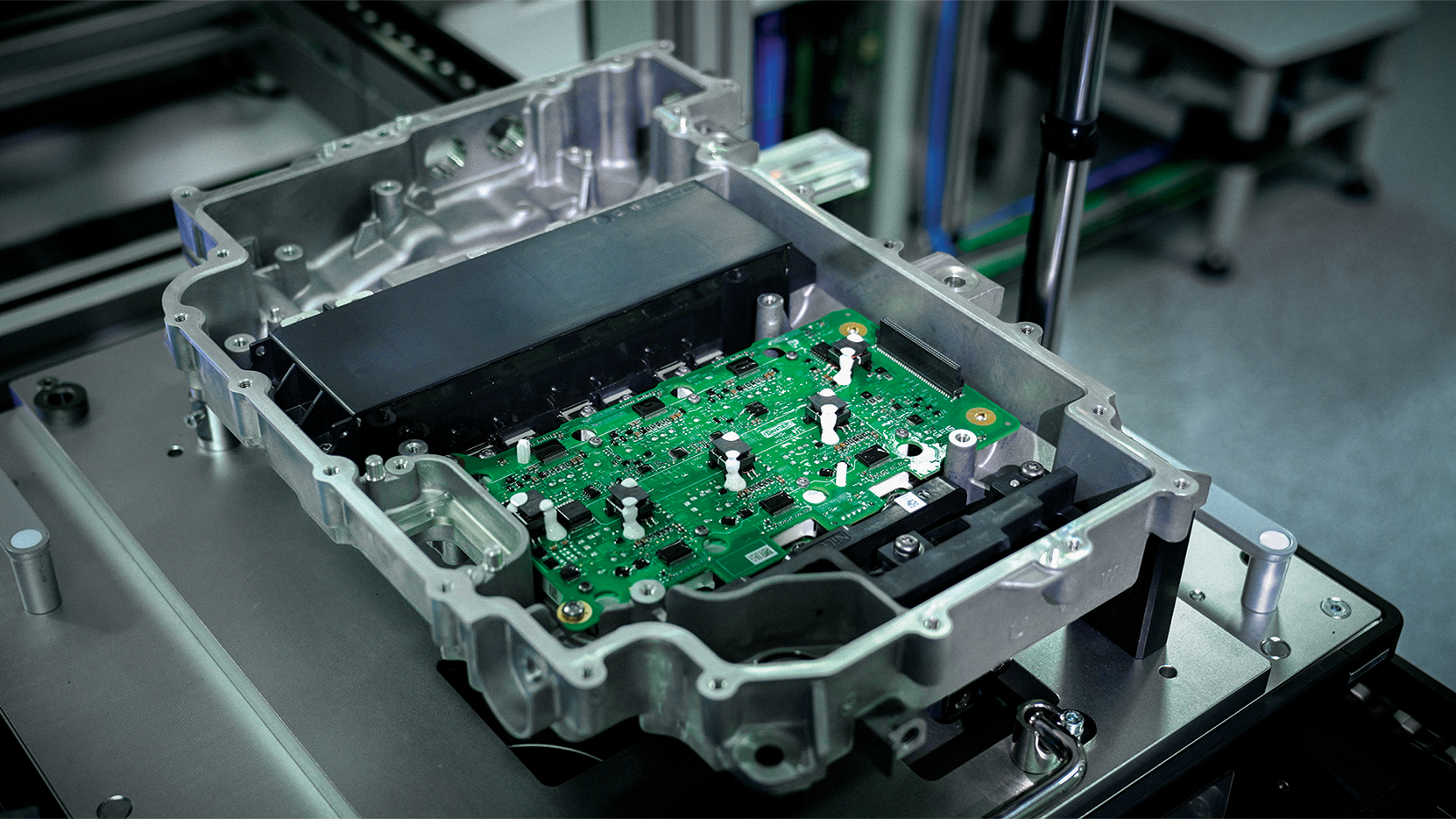
What is ASC and How Does It Work?
At the heart of every electric vehicle drivetrain are the electric motor, which converts electrical energy into motion, and the inverter, which manages the flow of energy to the motor. If a fault occurs, such as an inverter failure or electrical malfunction, excessive currents or overvoltage conditions can threaten system integrity.
ASC is a carefully engineered protection function that helps mitigate these risks. It does not prevent faults from occurring but increases the system’s robustness under fault conditions. In the event of a fault, ASC drives the electric drive system into a safe state by shorting the motor phases and dissipating excess energy in a controlled manner.
The Challenges of Conventional ASC Approaches
Implementing an effective ASC strategy is far from straightforward. Our research identified several major challenges that existing approaches struggle to address.
When ASC is activated, the sudden short circuit can generate current peaks reaching up to twice normal operating levels while creating significant thermal stress in the power semiconductors. These extreme conditions can exceed safe electrical and thermal limits, placing considerable stress on critical components such as silicon carbide devices, the DC-link capacitor, and the permanent magnets used in Permanent Magnet Synchronous Motors.
If not carefully managed, these effects can lead to permanent damage, including magnet demagnetization, accelerated semiconductor aging, and voltage overshoot that threatens system stability.
Conventional ASC approaches transition directly into a short-circuit state. As a result, high current peaks, DC-link overvoltage, and increased thermal stress can occur, reducing overall system robustness.
Enhanced ASC: An Advanced Protection Approach
SEG Automotive’s Enhanced ASC builds on conventional methods through an intelligent, stepwise control strategy.
Instead of immediately shorting all motor phases, the system first stabilizes the DC-link voltage using controlled charge and discharge cycles, maintaining the voltage within a safe range of 920 to 950 V in an 800 V system. To ensure smooth energy transitions, space vector modulation with six predefined voltage vectors is applied, selected in real time based on measured phase currents.
Once stable operating conditions have been established, two motor phases are shorted at the optimal rotor position of 90°. The protection sequence concludes with symmetrical three-phase shorting, ensuring balanced energy dissipation while minimizing torque ripple.
Rather than applying an immediate hard short-circuit, the enhanced ASC strategy first controls the energy transfer within the drive system before transitioning into the final ASC state.
The entire process takes less than 15 ms and reduces current peaks by approximately 30% compared with conventional approaches.
Quantified Safety Gains
The benefits of Enhanced ASC translate into tangible advantages for both vehicle manufacturers and drivers. Our approach reduces peak current levels from approximately 1.9 times nominal current to just 1.34 times nominal current while keeping semiconductor temperatures below critical thresholds at 160.7°C, compared with 180.9°C for conventional ASC methods.
This comprehensive protection prevents permanent magnet demagnetization and extends the lifetime of power semiconductor components.
Importantly, these improvements are achieved without additional hardware changes, making more effective use of the existing inverter architecture through advanced control strategies.
Looking Ahead
For automotive engineers and industry leaders, Enhanced ASC represents an important step forward in functional safety for electric drive systems. It transforms a traditional protection function into a more advanced control strategy capable of addressing the complex demands of modern EV powertrains.
As electric vehicles continue to evolve, technologies such as Enhanced ASC will become increasingly important in delivering the reliability, safety, and performance expected from next-generation mobility solutions. They help protect both the sophisticated power electronics at the heart of electric propulsion and the people who rely on them every day.
Functional safety means more than avoiding failures. It is about designing systems that can prevent issues where possible and effectively limit their impact when they occur.
At SEG Automotive, we apply this mindset throughout the development of our electric drive systems, from concept and design through to implementation. The result is technology that combines safety, reliability, and efficiency without compromise.
We are the motor – for the mobility of today and tomorrow.
Further Reading
Nima Saadat and colleagues recently published a detailed technical analysis of advanced ASC strategies in
[Opens in a new tab]
ATZ electronics worldwide 7-8/2026 under the title "
[Opens in a new tab]
Soft Active Short-Circuit Strategies for Inverters".

Press contact
SEG Automotive
Christoph Hoelzl
Press Officer / Pressesprecher
Tel.
[Opens in a new tab]
+49 711 4009 – 8172
[Opens in a new tab]
press@seg-automotive.com